The first page lies flat and the office clock says four. The clerk wrote the river down the shelf column of his own book, and the eight dockets are on the counter under your hand.
Page Two: the last run
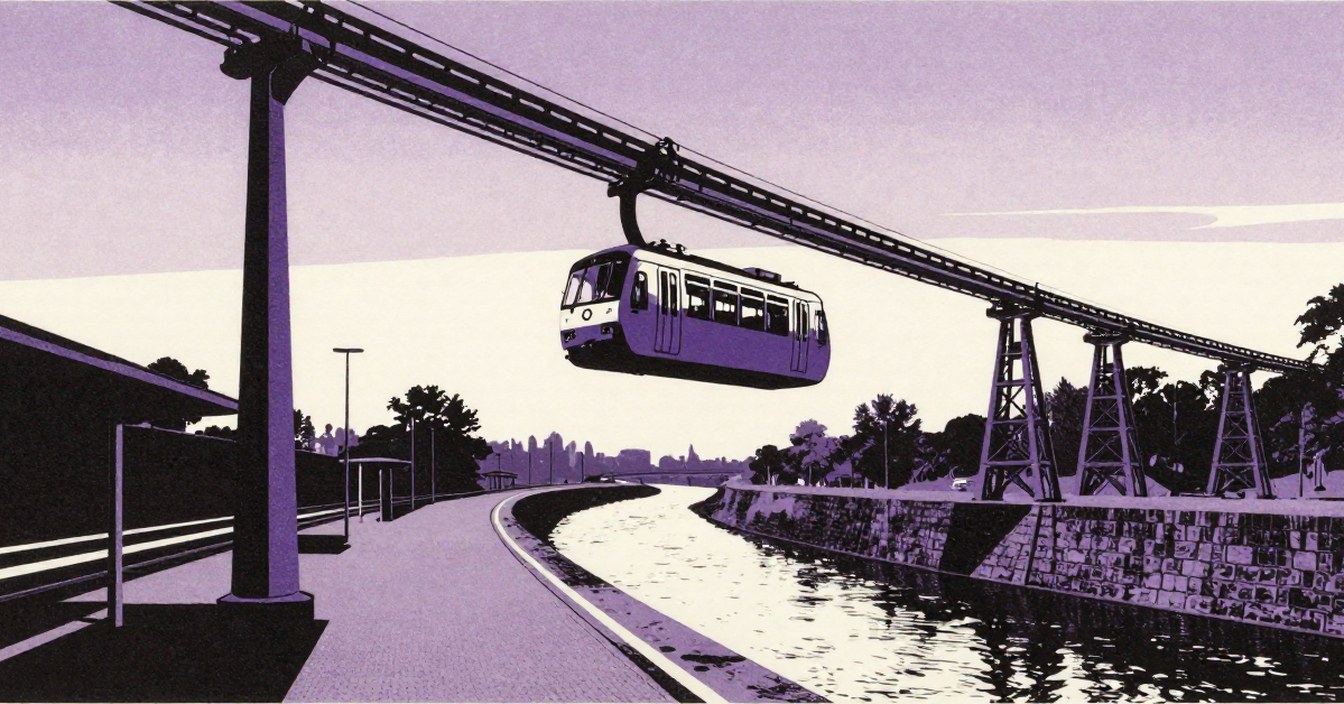
The eight consignments in the last year all went out on the same service and all of them went to the end of the line. The clerk rode with them, which was not his job, and he rode the whole line to do it, from one terminus to the other. He wrote a note at the bottom of each docket about the journey out.
Seven of the notes are about the weather. The eighth is this:
Docket 8, in the clerk's hand
Wupper under us the whole way
and then it was not, and we
ran the last of it over the
road instead. Same as always.
Nobody on the platform.
He is describing the end of the line he was travelling towards, and he is describing it accurately. The railway does exactly this: it hangs above the river for most of its length, and then the river turns away and the track finishes above a road. That only happens at one end.
This page does not open with anything printed above. The Schwebebahn is real, it is still running, and the name of the terminus he was riding to is a matter of public record.
Work out which end of the line he was travelling towards, then go and find what that terminus is called. Wikipedia's article on the Wuppertal Schwebebahn names both ends and says which is which. Type the one he rode to.
The key names the end of the line for you, if you want it.