You come along the top of the dyke to Sallow Brook with the pie held out in front of you like a man carrying a lamp, and the knight is there, on the far bank, not drowned and not eaten, sitting beside a lame horse. He has seen you. The thing in the reeds between you has not; it is asleep. The pie goes down on the bank. The vicar's slip says how the thing is woken, and it is not from here: you run.
Step Three: the ropes
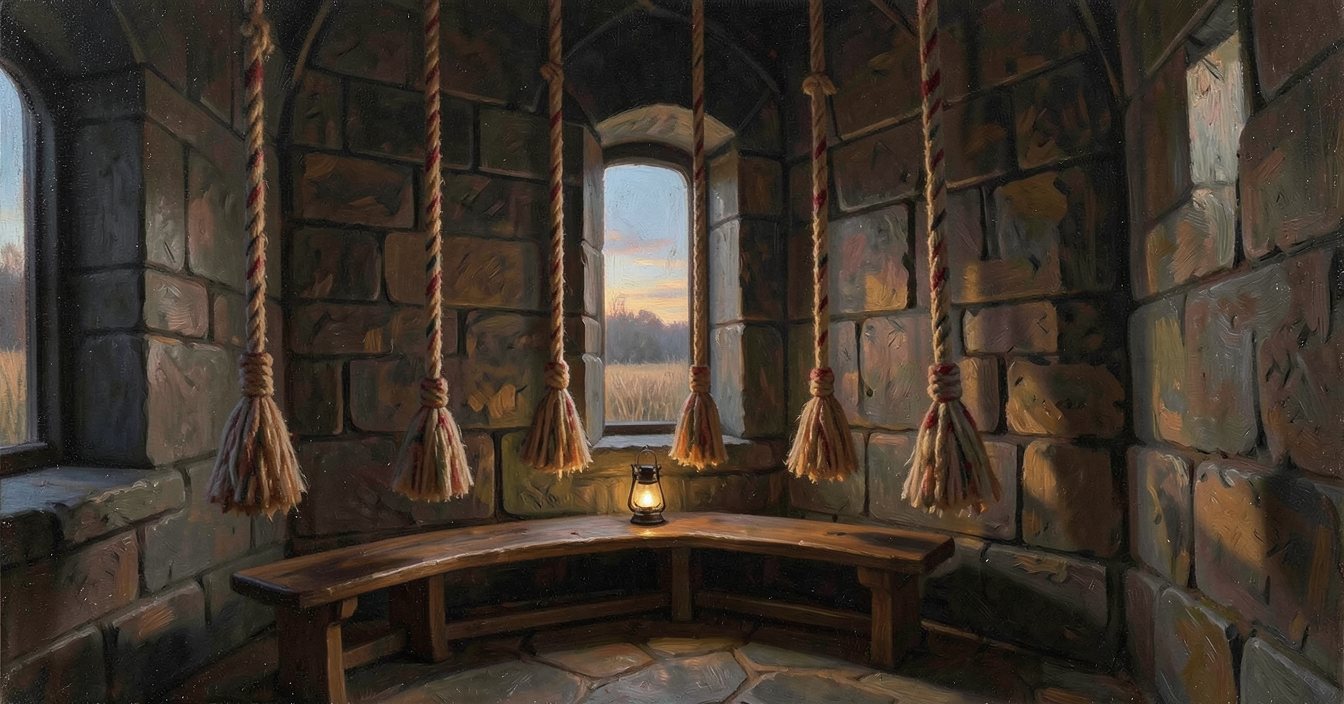
Six bell-ropes hang in the tower at Lyminster, and the story the village tells is that the night the beast was first bound they tied all six together and let them down into the Hole, and never found the bottom. The vicar's slip says the ropes are what it comes to: ring the six as they were rung that night, once each, and it comes up the dyke to whatever is on the bank. The sexton has left the tower door open and the lantern lit.
The slip, in the vicar's hand
- Six bells, each rung once. The treble is the lightest and the tenor the heaviest; between them hang two, three, four and five, in order of weight.
- The fifth is rung last.
- The tenor is rung neither first nor last, and the treble follows it at once.
- Two and four are rung one after the other, the lighter first.
- The tenor is rung after both of those.
- The third is rung after the second, and never beside the fifth.
Ring it wrong and the water comes up another mark.
Tap the ropes in the order the slip gives, and ring.
Rung so far: nothing yet
This step, in words
Six buttons, lightest to heaviest: Treble, Two, Three, Four, Five, Tenor. Tap them in the order you want them rung; the order so far is read out after each tap. Ring commits the six; Let go clears them. The slip's six rules are the whole puzzle and are printed above the ropes.
The sexton chalked the vicar's rules out on the tower wall, if you want them.