The fire is high and the kitchen hot, and in the hall somebody is rapping on the shutter from outside, politely, the way a gentleman knocks.
Hour Two: the order on the door
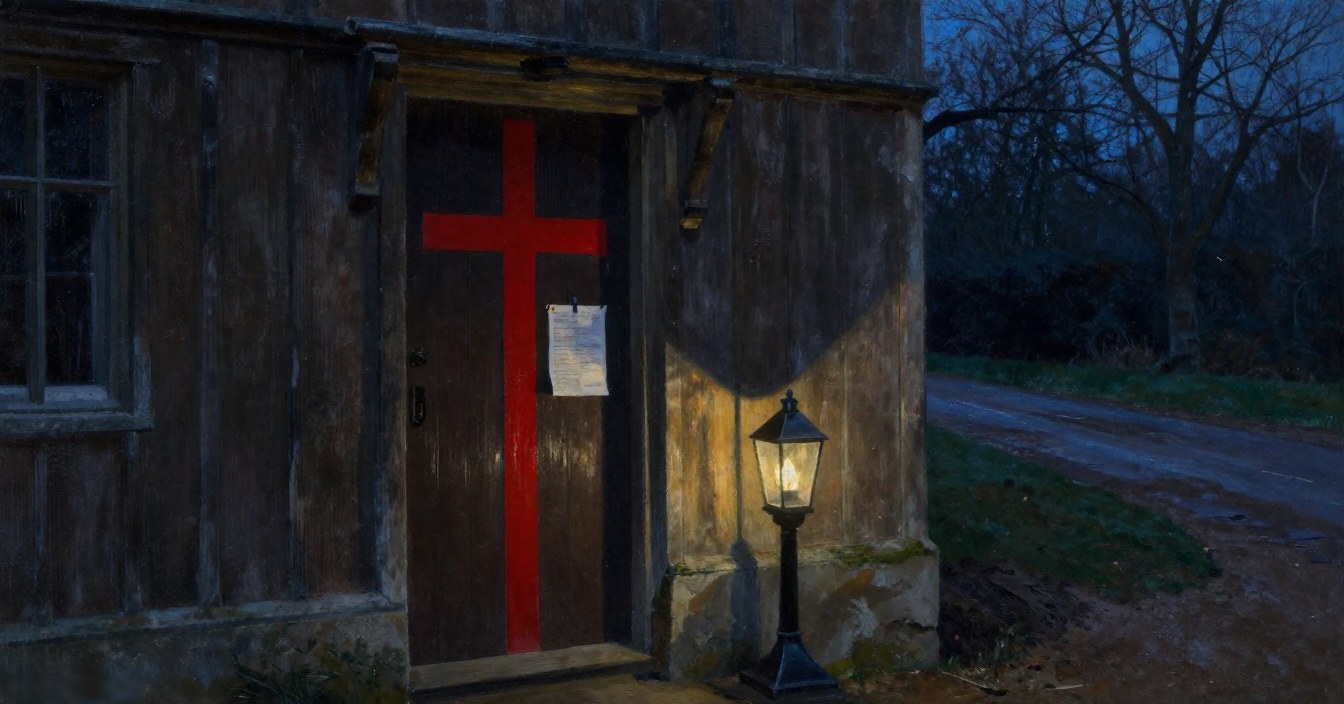
The knocking is at the hall shutter. The voice behind it belongs to a man who is well fed and in no hurry, and it says that he is Mr Pepys of the Navy Board, riding north on the King's business, that he saw the cross, and that he is sorry for it.
He says the bill of mortality is down this week, God be thanked, by above four hundred: of 1,388 dead in London, 1,031 of the plague. He means to write it in his book tonight.
He will carry a letter for the house, if anybody wants one carried. He keeps a book, he says, in which he writes down everything he sees, in a hand nobody else can read, and he would like to write down the day this house will be let out. He asks for it the way a churchman would give it.
The order is nailed to the outside of the door. Hold the candle close behind the crack and the writing shows through the paper, backwards:
SECITSUJ EHT FO REDRO YB
PU TUHS SI ESUOH SIHT
REBOTCO FO DNOCES EHT
TSAP EB SYAD YTROF LLIT
SU NOPU YCREM EVAH DROL
The almanac went on the fire a week ago, with everything else that would burn, and nobody in the house can say the saints' days by heart. Mr Pepys will not take a number. He wants the day the way the Church names it.
October has one-and-thirty days.
Tell Mr Pepys the day the house is let out, as the Church names it.
To the still-room, before the lantern gets here.
Phoebe whispers that her mother counts on her fingers, and that the eleventh of November is the day of geese and hiring fairs.