Wednesday 28 October 2026, check-in
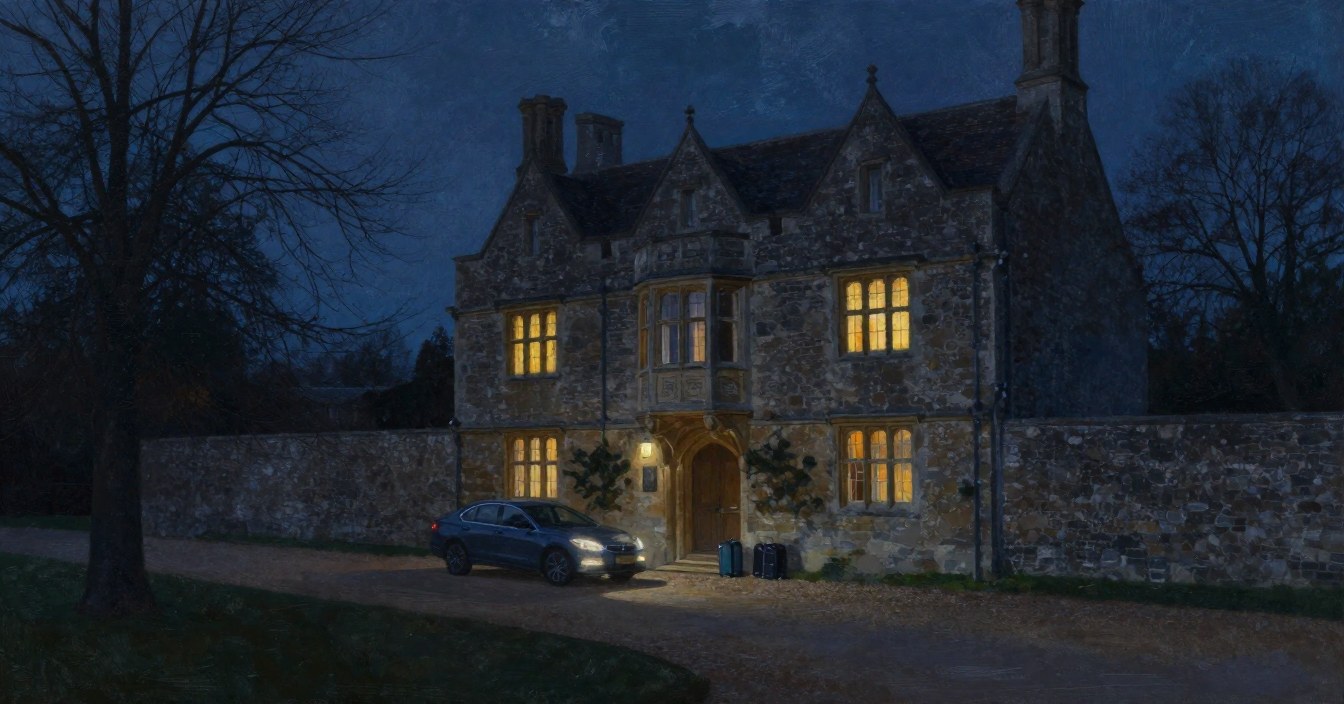
It was your idea, which is the part you will keep coming back to. Four nights in an English manor for Halloween, you and your friends, booked through an app at one in the morning because the price was wrong: four nights for less than one anywhere else. Somebody said there had to be a catch. The listing had one house rule, in bold, under the bit about parking:
Please keep the lights on after dark. The house prefers it.
Everybody laughed. You picked it because it looked haunted; that was the whole joke. Nobody thought, for a single second, that the house might want to join in.
Sallowmere Hall is at the end of a long gravel drive off the old road north out of London, and it is bigger than the photographs. Every window is lit when you pull up, though nobody is there to meet you. The keypad on the front door takes the code from the booking first time, and the door swings in on a hall that is warm and smells of woodsmoke, as if somebody had just stepped out.
The host never appears. The host sends messages, polite and strangely formal, like a letter from somebody's great-grandmother, each signed with a single letter. The first arrives while you are still in the hall with your bags:
Welcome back to Sallowmere. You will find everything as you left it. P.
Back. Somebody says it must be a template.
The guest book on the hall table goes back years, and every entry, in every hand, says some version of the same thing: lovely house, kept the lights on. One family has underlined it twice.
The kitchen is white and new, and it hums. Behind the island is the old stone fireplace the listing calls a feature: huge, swept clean, cold. You eat, you pick bedrooms, you find the wine. Every hour or so all the lights in the house dip together, very slightly, like a breath, and come back.
At five to midnight your phone buzzes. Nobody else's does.
It is late. Please do not put out the lights. Not tonight. P.
That is when your friends decide it would be funny. They crowd into the kitchen with their phones up, filming, and dare you. One switch by the door works the whole floor. The lights are very white, the fridge hums, the fireplace behind you is cold, and the switch is already under your hand.
"Do it," somebody says. "Let's see what the house does."
Sallowmere Hall, three in the morning
Click.
The light goes out, and the laughing stops in the middle of a word.
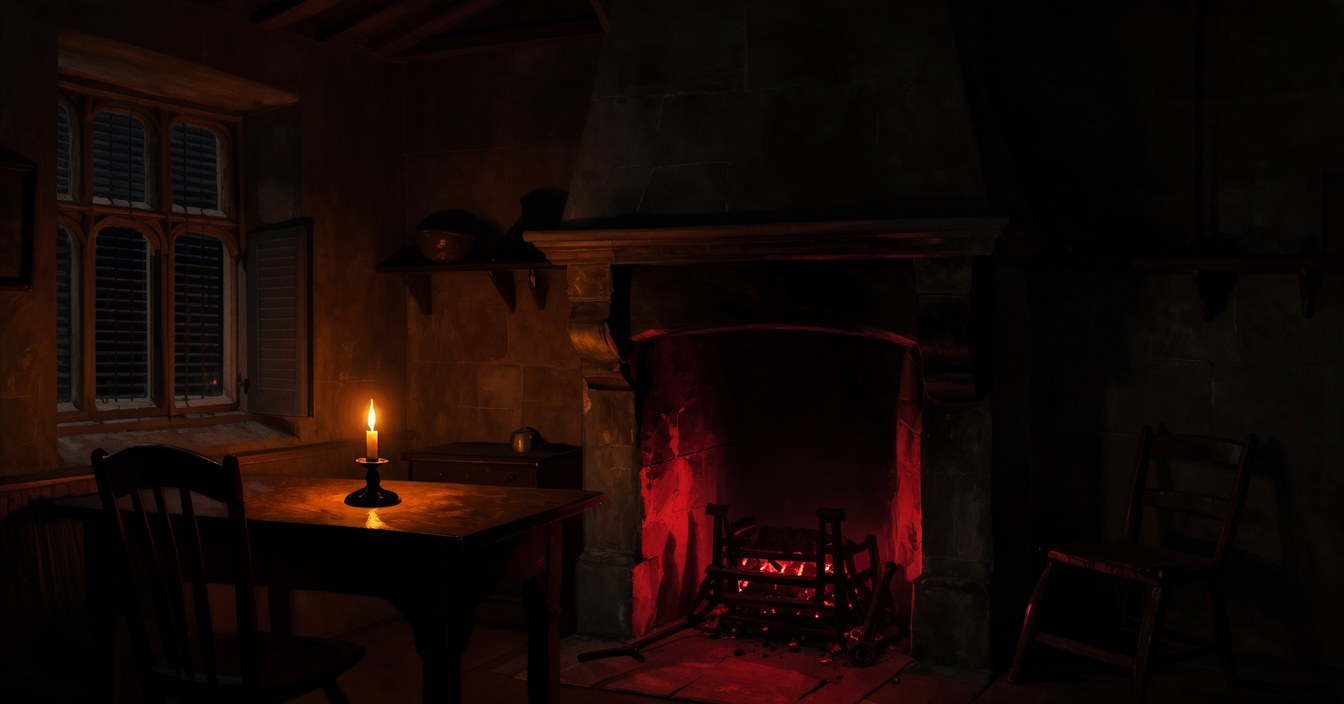
It is very dark, and suddenly cold. The fridge has stopped humming. The air smells of smoke. Your hand is not on the light switch any more. It is holding something heavy, made of iron.
Then you see a red glow, low down. It is a fire, almost out, in the big stone fireplace, and the thing in your hand is a poker.
You look round for your friends. They are not here. Nobody is filming, nobody is laughing, and their voices do not answer when you call. Far away, as if through a thick wall, you think you hear one of them laugh. Then that stops too.
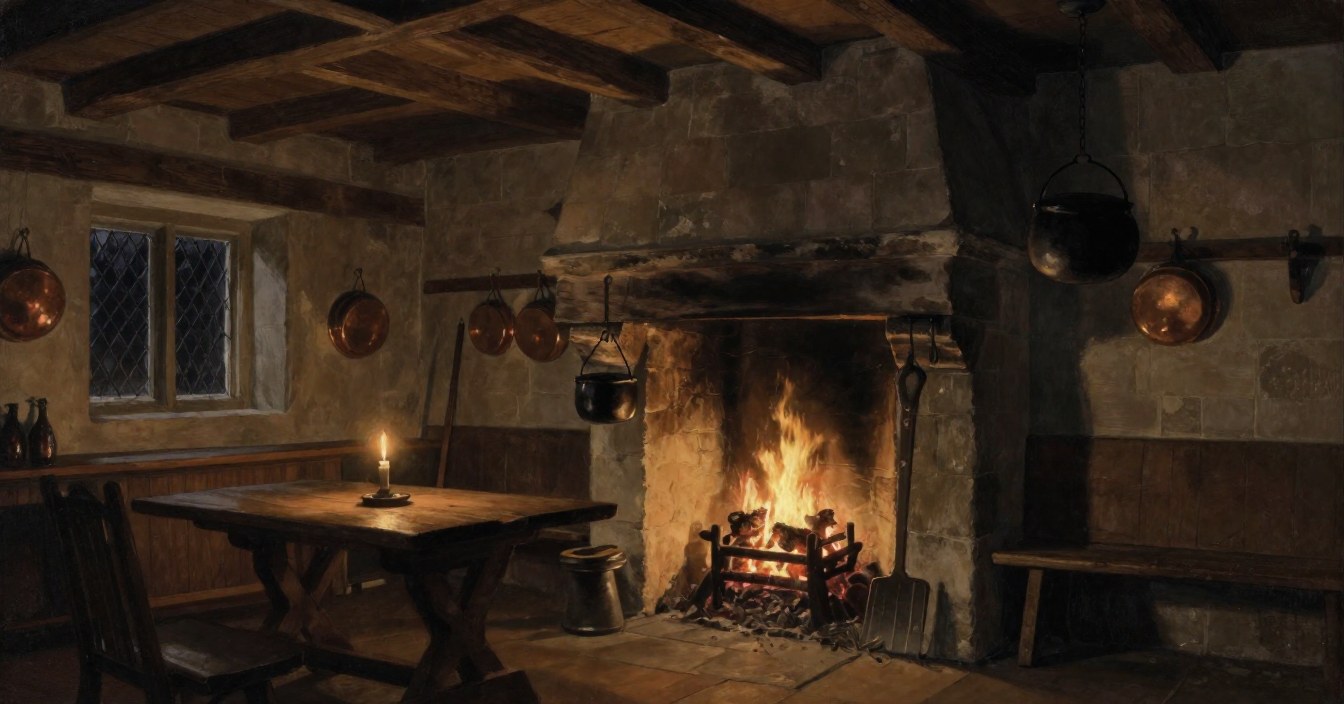
It is the same kitchen. The same fireplace, the same window, the same beams across the ceiling. Everything else has changed. The floor is stone. One candle burns on a bare wooden table. The window's shutters have been fastened from the outside.
A girl of about fourteen is kneeling at the fire, breaking up a chair and feeding it to the flames, one leg at a time. She does not seem surprised to see you. "Don't let it go out," she says. "Not before morning."
Bit by bit, she tells you where you are.
It is the last night of October 1665, All Hallows' Eve, and the plague is spreading out of London. A month ago, a chest of fine silk arrived from London for her sister's wedding. Joan, the maid who unpacked it, fell ill and was dead in four days. Then the parish men came. They painted a red cross on the front door, with the words Lord have mercy upon us, and nailed it shut. That was four weeks ago, and it is the law for a plague house: nobody goes in or out for forty days, so the sickness cannot spread.
The order on the door says one more thing. The fire inside must burn day and night, because people believe the smoke cleans the sick air. A watchman stands guard outside the front door. At first light he will look in through the shutters, and if the fire is out, the house has broken the order, and the forty days start again from the beginning.
It is three in the morning. First light is four hours away. The coal ran out at midnight.
Three people are shut in here. The girl is Phoebe, and the fire is her job. Her mother, Hester, runs the house. Old Tobias, the steward, has been round every room with a candle, writing down everything left that would burn. The watchman outside is Jonas Pike.
Nobody asks how you got in, because with the door nailed shut, nobody could have. Hester thinks the parish sent you to check on them. Phoebe thinks you came out of the fire. You have no idea. You only know that nobody in this house can leave, you included, and for the next four hours, keeping this fire alight is your job too.
Hour One: what will burn
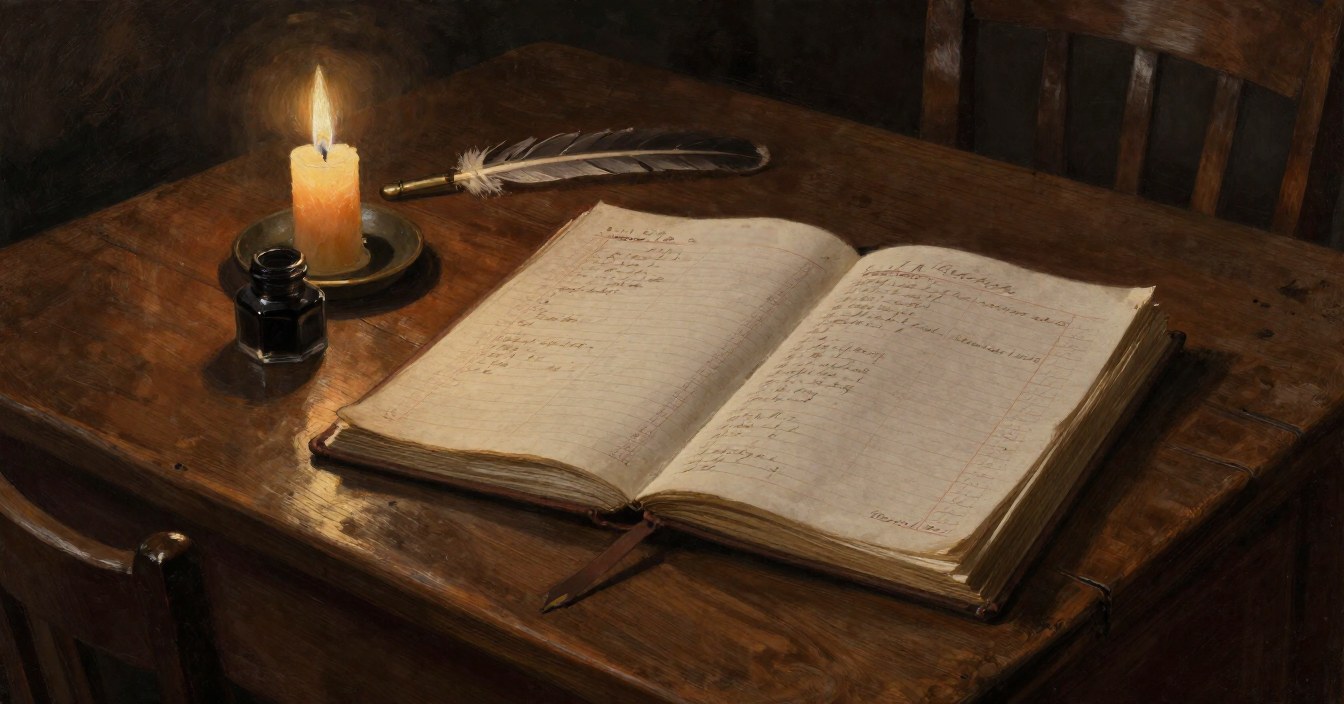
Tobias keeps the tally on the back page of the household book, in a hand like a row of nails. He began it when the coal began to run short, and he has been through the house with a candle and a measuring eye and written down everything that would burn and how long he thinks it would last.
WHAT IS LEFT TO BURN
kitchen chairs, 4  1/4 hr ea
the settle         2 hrs
shutter bars, 2    1/4 hr ea
the great Bible    not to be
the London chest   4 hrs +
Under the last line Hester has written, in a different ink:
The London chest is not to be burnt. It holds what is left of Margaret's silk, and it cost more than the house.
Phoebe says, to the fire and not to you, that Joan unpacked the chest. Joan was the maid. Joan is the reason for the cross.
Four hours to first light, and whatever goes on the fire has to last until then.
Choose what goes on the fire.
Tobias's tally, and the five things on it. Tap the one that goes on the fire.
To the hall: somebody is knocking.
Tobias clears his throat by the door. If you want his opinion of the tally, he has one.