Friday 30 October 2026, the third night
Last night ended with your friends gripping your hands, asking why yours had gone so cold.
On the hall table, beside the host's note, there was something new: a glass case with an old ledger open inside it. Nobody brought it. Nobody heard anyone come in. The keypad on the front door shows no visitors.
In the morning the host wrote:
You remembered where you put the key. She is pleased. P.
Somebody wants to leave. Somebody else points out that the booking is paid, it is one more night and then Halloween, and whatever this is, it has only ever happened to you. Nobody says what everybody is thinking: it has only ever happened when the lights go out.
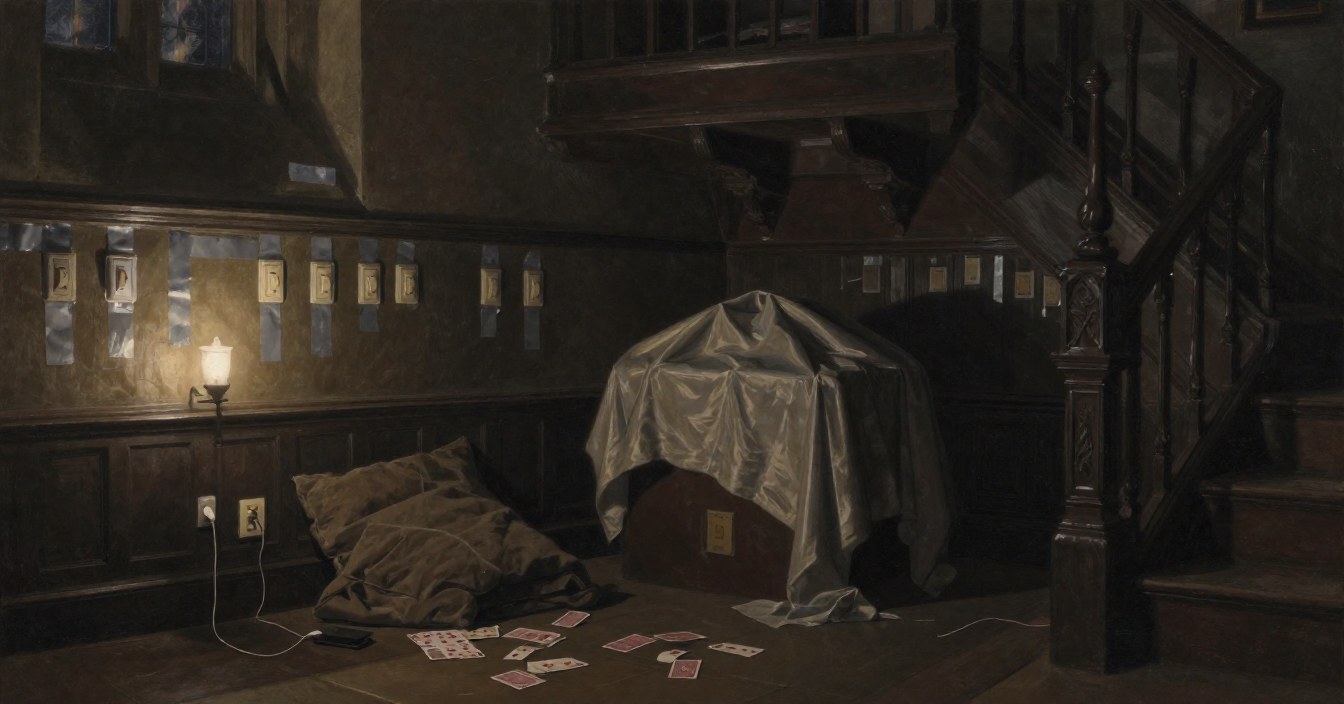
So tonight nobody touches a light. Your friends tape over every switch in the house, and you all stay together in the hall with cards and blankets and phones, every lamp burning. It is almost cosy.
At about seven, you notice the dust sheet.
It is over the hall table, over the glass case: a big pale cloth, the kind people throw over furniture when a house is shut up. It was not there an hour ago. None of your friends put it there. Under it you can just see the shape of the case, and inside the case, something that is not the ledger any more.
Your phone buzzes.
Two of them fly tonight. Please. P.
Your friends are begging you not to touch it.
The hall, Halloween night, 1942
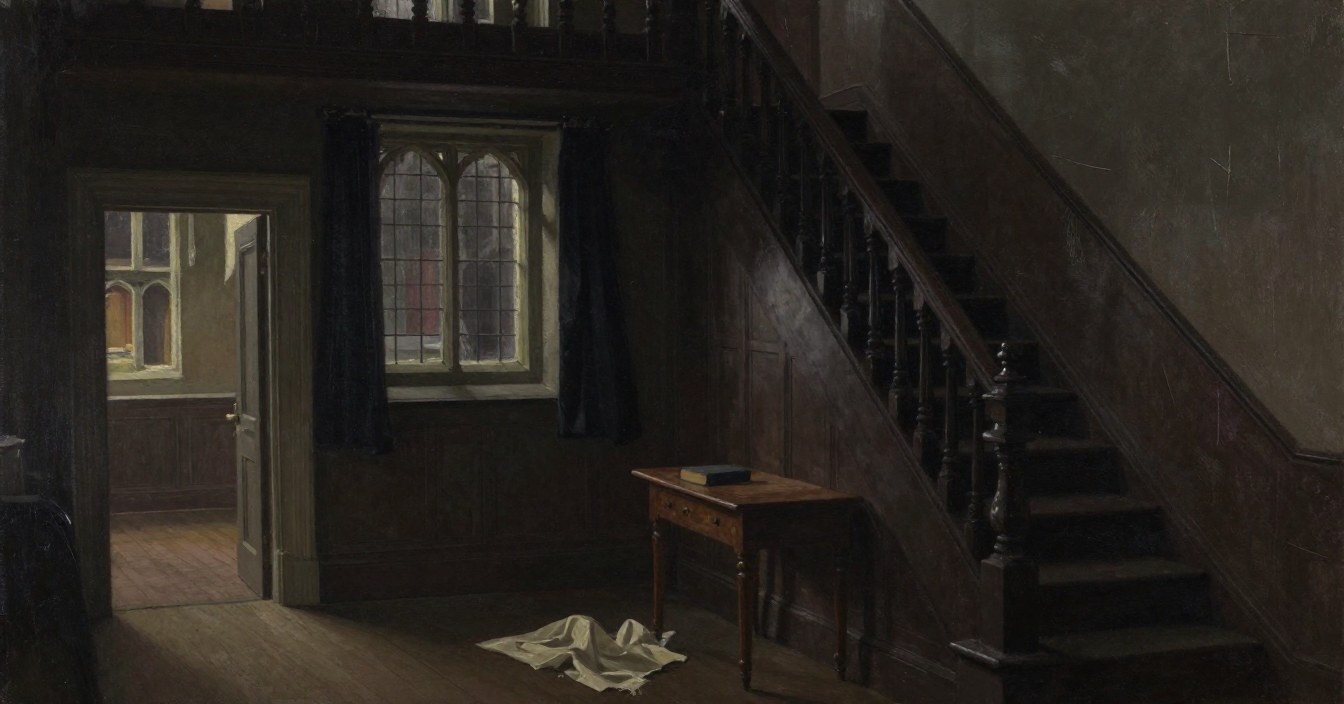
The sheet comes away in your hands, and every light in the house goes out at once.
It is completely dark. Your friends' voices stop. Under the sheet there is no glass case any more, only a bare wooden table with an old book lying on it. Somewhere outside a man is shouting: "Put that light out!"
Your eyes adjust. There is a faint glow from the kitchen doorway, and by it you can see the hall. It is the same hall: the same great stair, the same carved post at the foot of it. But every window is covered with heavy black cloth pinned to a wooden frame, and the air smells of cigarettes and floor polish.
Your friends are not here. The cards, the blankets, the phones: all gone.
It is the 31st of October, 1942. Halloween, though nobody here has time for it. Britain is at war with Nazi Germany, and at night every window in the country must be covered, so that German bombers overhead cannot see the towns below. This is the blackout. Wardens walk the streets to enforce it, and the man outside has seen a chink of light somewhere.
The war is going badly. Germany holds most of Europe, including most of France. In Russia, the German army is fighting through the city of Stalingrad street by street. In Egypt, for a week now, the British Eighth Army has been fighting at a railway halt called El Alamein, and nobody knows yet who is winning. From a wireless set somewhere in the house, faint and sneering, comes the voice the papers call Lord Haw-Haw, a traitor who broadcasts for the Nazis: "Germany calling. Germany calling."
Sallowmere has been taken over by the government. It is a secret school for agents of the Special Operations Executive: people trained to parachute into occupied France and send messages home to London by radio, in Morse code. The officers here do not use their real names, and nobody asks yours.
One of the school's best pupils, Clare Ashby, code name Linnet, was dropped into France last month. She has sent a message every night since. Every message carries two secret checks, like two passwords: a bluff check, which she is allowed to give away if the Germans catch her, and a true check, which she must never give away. If the true check is ever missing, London should know she has been caught, and that somebody else is using her radio.
Tonight at midnight two more agents, code names Teal and Rook, will be dropped into France to join her.
In the doorway to the east wing, an old man with a torch is watching you. It is Edmund Locke, seventy-four now. The government let him keep two rooms of the house he used to own. He does not ask who you are. He says you have not aged an hour since his séance.
And by the fire in the officers' room, doing a crossword, is a guest of the commandant's wife: a woman who writes detective novels as Agatha Christie. Last year the security people came to ask her why she had called a character in her spy novel Major Bletchley, and she has spent the whole weekend wondering, out loud, what this house is really for.
It is seven o'clock. The drop is at midnight. The commandant, Major Reeve, will not cancel it on a feeling. He needs proof that Linnet has been caught, and the secret stop-word that calls the drop off. You have five hours to give him both.
Hour One: the sitters' book
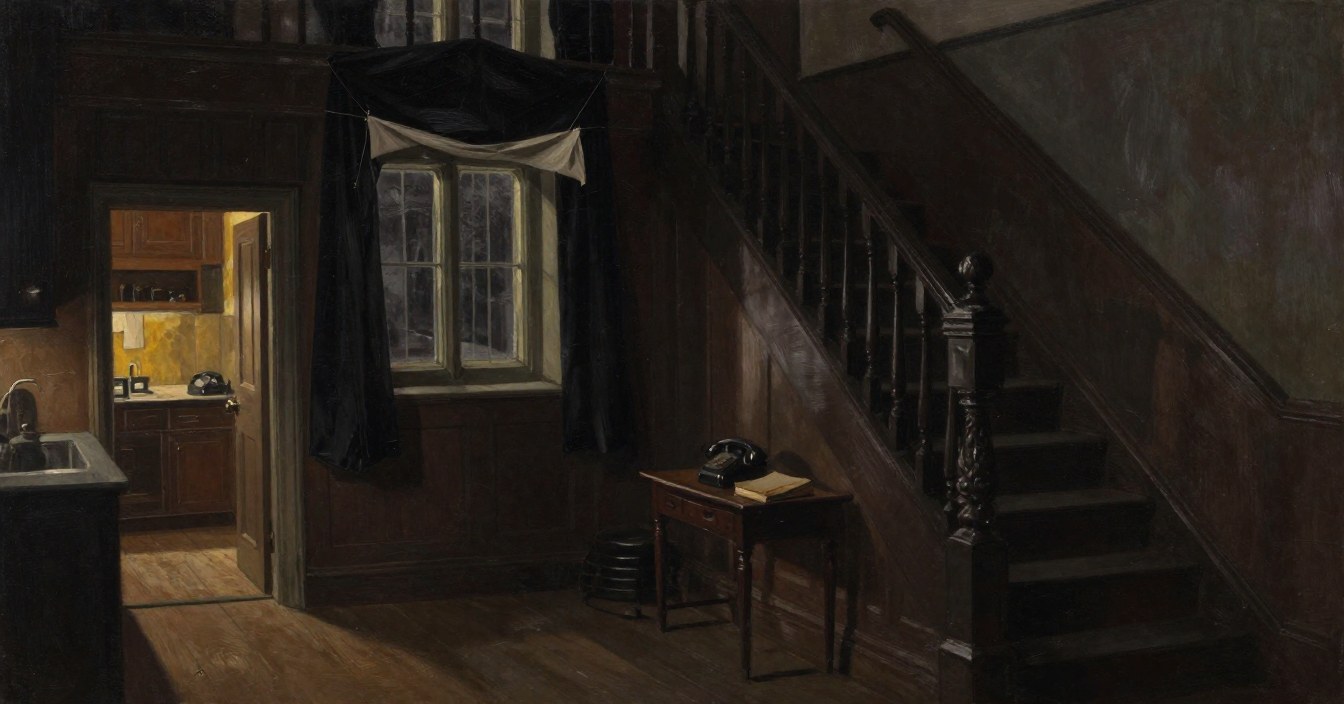
The book under the dust sheet is the sitters' book from 1922. Sir Arthur Conan Doyle's entry is at the top of a page in his big generous hand: a materialisation of rare clarity, the spirit answered for the boy with a single word. The word itself is under a blot of ink, as if somebody had once spilt a pen across it and never cleaned it off.
Edmund says he spilt it. He says he did not want anybody else to read it, because it was his.
He says that if you are who he thinks you are, you will know what you told him.
Tell Edmund the word you gave him at his sitting.
To the library, where the school keeps its logs.
Edmund says Kit sent it to him in dots and dashes, and that you read it to him.