What it answers to
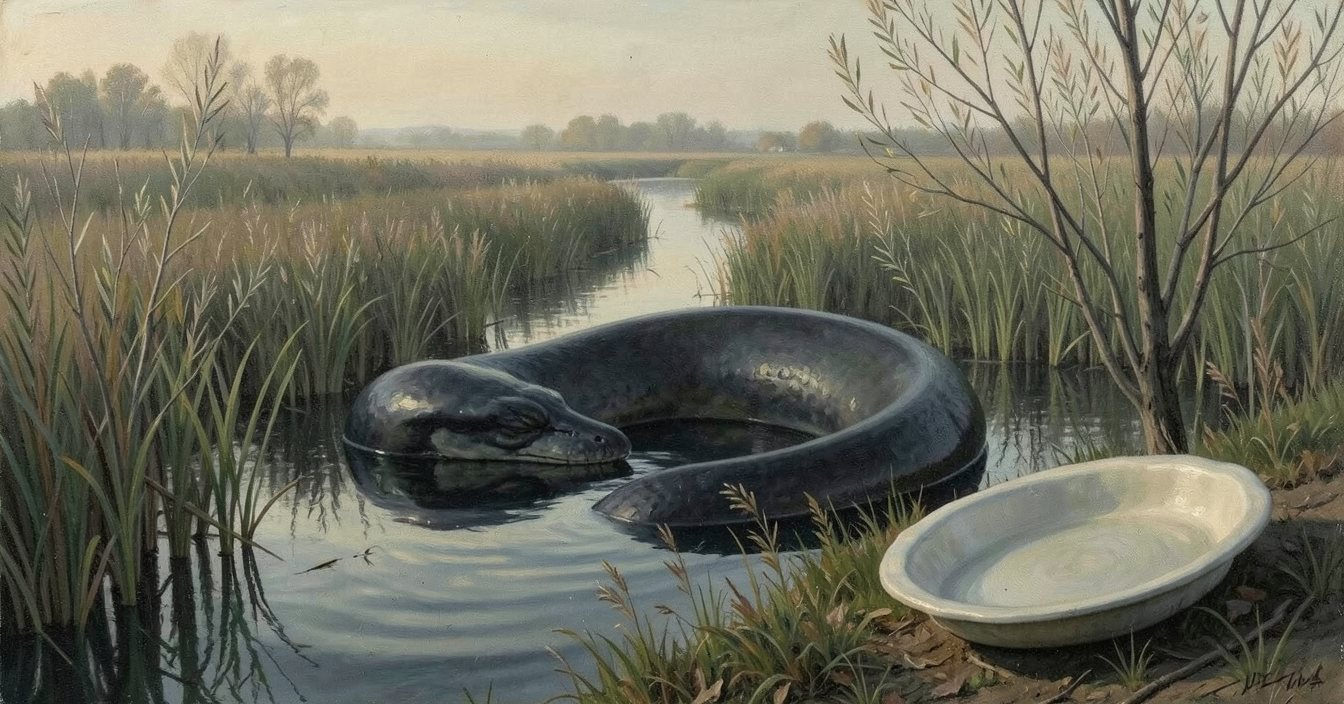
The knucker is asleep in Sallow Brook with its jaw in your dish, and the flood is going out under it.
The water on the sluice ladder drops a mark, and then another.
It came to the ringing. That is what the vicar knew and the knight did not: the beast in the Hole was not a thing to be fought, it was a thing to be called, and what it comes to is the six bells rung as they were the night it was bound. The word on the slab is older than the village. Nicor is what the English called a water-monster before there was a Sussex to call it anything, and knucker is what the brooks did to the word over a thousand years of saying it.
The pie did the rest. Wolfsbane root, two drachms, which is more than enough for a horse and, it turns out, about right for a knucker. It ate the pie and most of the cloth, and lay down in Sallow Brook where it had been lying all along, and slept.
The knight got the horse up in the end. He will tell it his way in the Six Bells, which is the inn, and in his way there was a sword in it, and the vicar will let him, because the vicar has the slip back and the parish has its evening.
The knight gets the slab in the church and the song at the Six Bells. You get the dish back, and a walk home across the brooks in the dark, on the paths that are still dry.
Title earned: Pulk's Apprentice.
FINISHED · THE KNUCKER OF LYMINSTER · 856D14
Got out? Say so.
Post the card, or the line, with the room's link, and tag @latch.keys. Both prove you finished and give nothing away.
Instagram: on a phone, Share puts the card straight into a Story or a DM. Otherwise save the card, copy the caption, and post it from the app.
We got out of The Knucker of Lyminster (856D14), an online escape room you play with friends in about 25 minutes. https://playlatchkeys.com/play/knucker-of-lyminster @latch.keys
You are the second person through this door. The first was Jim Pulk, in a story Lyminster has told for longer than the church has had its tower.